

SEC’s approval clears the way for Dangote refinery IPO Issue
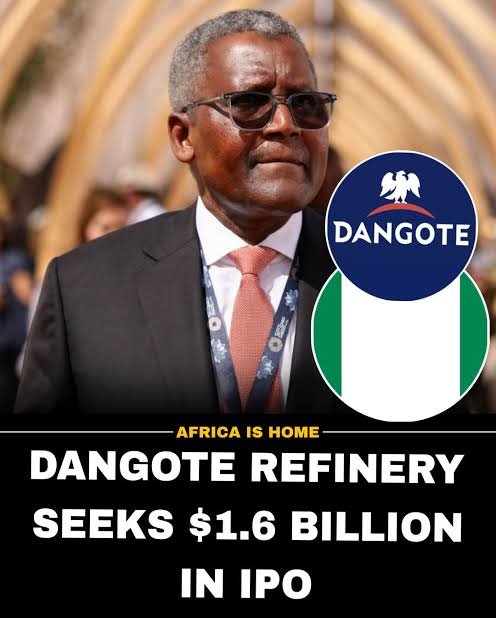
The Securities and Exchange Commission, SEC’s approval clears the way for a potential ₦2.15 trillion Initial Public Offering, IPO, giving public investors an opportunity to own a stake in one of Africa’s largest industrial assets.
The proposed IPO of Dangote Petroleum Refinery and Petrochemicals FZE is shaping up to be a landmark transaction for Nigeria’s capital market.
The SEC approved the commencement of the offering, clearing the refinery’s draft offer documents and moving the transaction into its next phase.
Under the proposal, 4.1 billion ordinary shares will be offered at ₦525 per share. The SEC has also registered the company’s existing 120.13 billion ordinary shares.
For investors, however, the significance of the IPO goes beyond its headline size. The offer raises questions about valuation, future earnings, dividends, expansion, risks and the potential impact of owning a stake in a business at the centre of Nigeria’s energy and industrial ambitions.
Here are 10 key facts Nigerian invesstors should understand
1. The IPO could raise ₦2.15 trillion
At an offer price of ₦525 per share, the proposed sale of 4.1 billion shares could generate approximately ₦2.15 trillion if fully subscribed.
That would make the transaction one of the biggest capital-market offerings in Nigeria’s history.
The size alone could have implications for the Nigerian Exchange, potentially increasing market capitalisation and providing investors with access to a major company outside the traditional banking and telecommunications heavyweights that dominate Nigerian equities.
For the company, the proceeds could provide additional capital for its business and expansion plans, subject to the terms set out in the final offer documents.
2. Investors would become shareholders in the refinery business
The IPO changes the relationship between Nigerians and the refinery.
Instead of the facility being viewed solely as a major infrastructure project owned by a private group, the public offering would allow investors to acquire shares and participate in the company’s ownership.
But ownership also comes with investment risk. Shareholders would be exposed to the company’s financial performance and the wider risks affecting the refining and petrochemical industries.
3. ₦525 is an entry price, not a guaranteed return
One of the most important distinctions for prospective investors is that the ₦525 IPO price does not guarantee that the shares will later trade above that level.
Once listed and actively traded, the share price will be influenced by supply and demand as well as the company’s earnings, outlook and broader economic conditions.
The stock could appreciate if investors believe the company is undervalued or its earnings prospects are improving. Conversely, it could fall below the offer price if expectations deteriorate.
Investors should therefore approach the IPO as an equity investment rather than a guaranteed-return opportunity.
4. The refinery operates at an extraordinary scale
That means shareholders could potentially benefit from future capital appreciation and dividends if the company performs well and declares distributions.
The refinery currently has a stated refining capacity of 700,000 barrels per day, making it the world’s largest single-train refinery.
Its scale gives investors exposure to a business capable of processing enormous volumes of crude oil and producing refined petroleum products for domestic and international markets.
The company’s ability to operate efficiently at that scale will be a critical factor in determining its long-term profitability.
5. Expansion could fundamentally change the company’s earning capacity
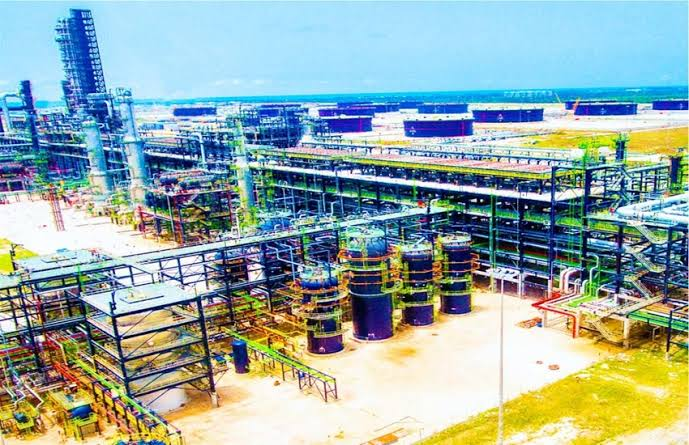
The refinery is also undergoing an expansion programme expected to increase capacity to 1.4 million barrels per day.
If completed successfully, the expansion would more than double the current capacity and position the facility as the world’s largest refinery.
For shareholders, increased capacity could mean greater production, higher revenues and stronger export potential.
But expansion also introduces execution risks. Investors will need to consider the capital required, the timetable for completion, financing arrangements and whether additional capacity ultimately produces attractive returns.
6. It is an integrated energy and petrochemical complex
The investment story extends beyond petroleum refining.
The complex includes a 900,000-tonnes-per-annum polypropylene plant, a dedicated 435-megawatt power plant, extensive storage facilities and marine infrastructure.
Its storage network consists of 177 tanks with a combined capacity of approximately 4.742 billion litres.
The company also has a dedicated marine facility designed to improve logistics and freight efficiency, including multiple quays capable of handling Panamax vessels, liquid cargo and roll-on/roll-off operations.
For investors, this integrated infrastructure could provide operational advantages and multiple sources of commercial activity.
7. Domestic demand gives the business a huge potential market
Nigeria is one of Africa’s largest oil-producing countries, but it has historically relied heavily on imported refined petroleum products because of inadequate domestic refining capacity.
The Dangote Refinery was developed partly to address that structural gap.
At full production, the facility is designed to meet a substantial portion of Nigeria’s demand for refined petroleum products while also supplying export markets.
That creates a potentially significant domestic market for the business while giving it the opportunity to earn foreign revenue through exports.
However, the company’s actual financial performance will depend on factors including crude availability, refining margins, domestic demand, export economics, operating costs and market prices.
8. Investors will need to understand the company’s ownership and share structure
The SEC has registered 120.13 billion existing ordinary shares, while the proposed public offer covers 4.1 billion shares.
This makes the final ownership structure particularly important for investors.
Before subscribing, investors should examine the final prospectus and offer documents to determine the percentage of the company being offered to the public, the resulting free float, the rights attached to the shares and the concentration of ownership after the IPO.
The structure matters because a company’s free float and shareholder composition can influence liquidity and how easily investors can buy or sell shares after listing.
9. Profitability matters more than the refinery’s impressive headline numbers
The refinery’s capacity, size and infrastructure make for compelling headlines, but investors ultimately need to focus on the company’s ability to generate sustainable profits and cash flow.
Key indicators to watch will include revenue growth, operating margins, refining margins, production volumes, utilisation rates, operating expenses, debt obligations and cash generation.
Other important risks include crude supply, foreign-exchange movements, global oil prices, petroleum-product prices, regulatory changes, maintenance requirements and competition in domestic and international markets.
The refinery can be strategically important to Nigeria and still be an investment that requires careful valuation.
10. The IPO could reshape the Nigerian investment landscape
Perhaps the biggest significance of the transaction is what it could mean for the relationship between Nigerian investors and large-scale domestic businesses.
A successful listing would allow individuals, pension funds, institutional investors and other market participants to own shares in a company operating one of Africa’s most significant industrial assets.
It could also inject fresh activity into the Nigerian equity market and encourage more companies to consider public listings as a way of raising long-term capital.
For retail investors in particular, the IPO could become an important test of whether Nigerians are willing to commit substantial savings to large domestic companies when the investment case is compelling.
What investors should check before subscribing
SEC approval is an important milestone, but it is not an investment recommendation.
Prospective investors should wait for and carefully study the final offer documents, paying particular attention to the company’s historical and latest financial results, profitability and cash-flow performance, debt and other financial obligations, the proposed use of the IPO proceeds, the valuation implied by the ₦525 offer price, dividend policy and prospects, the percentage of shares available to the public, expected listing and trading arrangements, expansion costs and execution risks, as well as exposure to crude supply, foreign exchange movements and global refining margins.
The proposed Dangote Refinery IPO therefore presents two stories at once: a landmark opportunity for the company to raise long-term capital and a potentially significant investment opportunity for Nigerians seeking exposure to one of Africa’s largest industrial assets.
The ₦2.15 trillion potential fundraising figure makes the transaction impossible to ignore. But for investors, the more important question will ultimately be whether the company’s future earnings and cash flows justify the price at which those shares are being offered.
If successfully completed, the IPO could become a defining moment for Nigeria’s capital market. For individual investors, however, the landmark status of the transaction should be the starting point for due diligence — not a substitute for it.
Credit: Vanguard Newspapers

 Emeka OBINNWA(http://emex-systems.com)