

World Leaders reconsider dependence on US as security tensions rise
For decades, the United States has occupied a central position in the international security system. Its military alliances, intelligence networks, weapons industry, naval presence and diplomatic influence have helped shape the balance of power across Europe, Asia and the Middle East.
But in 2026, several developments are forcing U.S. allies to reconsider how much they should depend on Washington — and how quickly they need to strengthen their own capabilities.
The issue is not simply whether America’s traditional partners are “turning their backs” on the United States. The reality is more complicated. Many allies continue to cooperate closely with Washington. At the same time, governments in Europe and Asia are increasingly discussing alternative defense arrangements, expanding domestic weapons production and preparing for scenarios in which American military resources may not always be available when needed.
The debate has become particularly intense because of the prolonged conflict involving Iran, which has consumed large quantities of American missiles and other military equipment.
At the same time, questions surrounding the security of the Strait of Hormuz, cyberattacks attributed by U.S. authorities to China-linked actors, Russia’s continued military activity and the extraordinary deployment of the USS Abraham Lincoln have all highlighted the pressures facing Washington.
Together, these developments point to a broader strategic question:
How much of the world’s security architecture can continue to depend on American military power — and what happens if America’s allies decide they need more independent capabilities?
1. The Strait of Hormuz Dispute Raises Questions About Battlefield Assessments
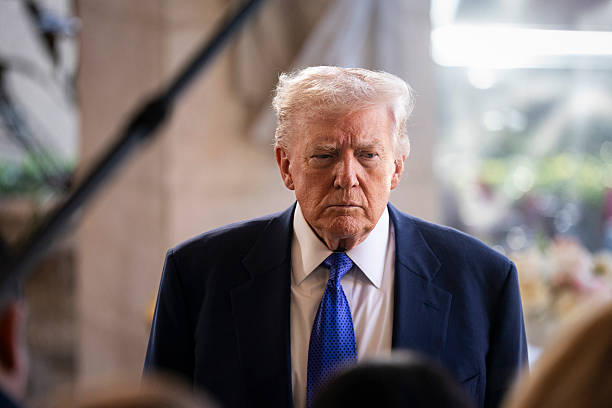
One of the most visible disagreements emerged around the Strait of Hormuz, the strategically important waterway connecting the Persian Gulf with the Gulf of Oman.
President Donald Trump repeatedly stated in August that the United States had successfully removed or detonated mines laid in the strait. On August 25, Trump described Hormuz as a functioning waterway and again said the mines had been eliminated.
But reports based on conversations with U.S. allies presented a different assessment.
Bloomberg reported in August that allied officials privately believed that demining operations had not necessarily eliminated all of an estimated 80 to 150 mines believed to have been laid by Iran. The officials acknowledged that the United States had made progress, particularly in international waters, but remained concerned that some mines could still pose a threat.
That does not mean the United States had failed to clear the primary shipping lanes.
In fact, U.S. Central Command has disputed the more pessimistic assessment. CENTCOM spokesman Captain Tim Hawkins said internationally recognized transit routes in the Strait of Hormuz were free of Iranian sea mines. U.S. officials also argued that the 80-to-150 estimate being cited by allies was outdated.
That distinction matters.
The disagreement is therefore not simply a question of whether the United States cleared any mines. American forces clearly undertook mine-clearing operations and made substantial progress. The dispute concerns whether every remaining threat has been eliminated and whether commercial shipping can safely assume that the entire waterway is free of mines.
There is also a practical complication.
Allied officials warned that mines may have shifted because of sea currents, potentially making previously identified locations less reliable. They argued that restoring confidence among commercial shipping companies could require an international effort involving specialized mine-clearance equipment, naval protection and air support.
The International Maritime Organization also continued to urge vessels to exercise maximum caution when considering passage through the strait.
The situation illustrates a broader problem for Washington: military operations can produce one assessment while allies, commercial operators and foreign governments may maintain another.
That difference can affect markets, shipping decisions and international confidence even when the underlying military operation is continuing.
And there is another important development.
By September, the picture had improved substantially. Bloomberg reported that oil and liquefied-natural-gas shipments through Hormuz during the preceding two weeks had reached their highest level in six months. CENTCOM commander Admiral Brad Cooper said the primary transit lanes were clear of mines and that more than 1 billion barrels of crude had passed through the Persian Gulf in recent months.
So the story is not simply one of an abandoned or unusable Strait of Hormuz.
Instead, it demonstrates how difficult it has become to establish a universally accepted picture of security conditions in a conflict zone.
2. The Iran Conflict Is Putting Pressure on America’s Weapons Stockpiles
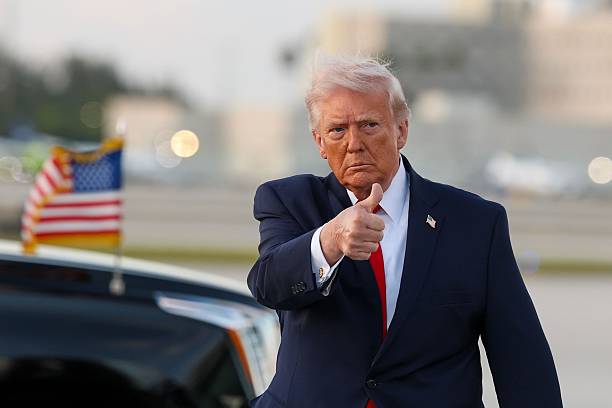
Perhaps the more consequential issue for America’s allies is happening far from the diplomatic headlines.
The prolonged war involving Iran has required the United States to use substantial quantities of precision-guided weapons and missile-defense interceptors.
That has raised concerns in Asia.
A Washington Post report in August found that American allies including Japan, South Korea and Taiwan were increasingly concerned about delays in weapons deliveries as U.S. stocks were consumed or redirected toward the Middle East.
The concern is especially significant for missile-defense systems.
Patriot and THAAD interceptors are not ordinary pieces of military equipment. They are designed to destroy incoming ballistic missiles, and there are relatively few substitutes that can perform the same mission at comparable ranges and levels of reliability.
A July analysis from the Center for Strategic and International Studies estimated that U.S. Patriot inventories had fallen below 1,000, while THAAD inventories stood at roughly 250. CHIS warned that continued fighting could create near- and medium-term risks for U.S. readiness, particularly in a potential conflict involving China in the western Pacific.
The Washington Post separately reported that the United States had already expended large quantities of munitions during the Iran conflict, including more than 850 Tomahawks during the first four weeks of the war, with CHIS later estimating that the figure had exceeded 1,000.
For allies in Asia, the concern is straightforward.
If Washington must prioritize replenishing its own inventories, supporting forces in the Middle East and maintaining commitments elsewhere, deliveries to partners could take longer.
Taiwan, for example, has billions of dollars’ worth of approved American weapons that have not yet been delivered. Japan has also been warned about potential delays involving weapons such as Tomahawk cruise missiles.
That does not mean America’s alliances in Asia are collapsing.
Rather, the problem highlights a vulnerability that existed before the current conflict: American weapons production cannot instantly expand whenever several major theaters demand the same systems simultaneously.
The Pentagon has responded by attempting to accelerate production.
In August, the United States signed a deal worth more than $3 billion with Lockheed Martin and Northrop Grumman to expand production of components used in Patriot and THAAD interceptors. The Pentagon said the framework could allow Patriot production to triple and THAAD production to quadruple.
That is a significant industrial response.
But production capacity takes time to expand.
The immediate strategic question for U.S. allies is therefore not whether America remains militarily powerful. It clearly does.
The question is whether American production can replenish inventories quickly enough while simultaneously meeting demands in multiple theaters.
3. Europe Is Exploring More Independent Defense Options
The same concerns are appearing in Europe.
German Chancellor Fried-rich Merz said in January that Germany was beginning discussions with France and Britain about how European countries could strengthen their nuclear deterrence arrangements.
The discussions do not amount to Germany acquiring nuclear weapons of its ownGermany remains bound by its existing international commitments, and the discussions have been described as exploratory. But the political significance is substantial: European governments are increasingly discussing what a stronger European security architecture could look like if American guarantees become less predictable.
By July, Merz and French President Emmanuel Macron were publicly discussing expanded Franco-German defense cooperation and examining a French offer concerning nuclear deterrence.
The discussions were described as complementary to NATO rather than an immediate replacement for the alliance.
That distinction is important.
European governments are not necessarily choosing between “America” and “Europe.”
Instead, many are attempting to build additional European capabilities inside or alongside the existing NATO framework.
Finland’s September decision to join France’s Forward Nuclear Deterrence Initiative provides another example. The initiative was created to strengthen European security and expand consultation between France and participating countries. Finnish President Alexander Stubb emphasized that the initiative complements rather than replaces NATO’s nuclear deterrence arrangements.
The trend is therefore better described as strategic diversification than a complete European break with Washington.
4. European Defense Spending Is Becoming More European
Another major change is occurring in defense procurement.
The European Union has been developing financial mechanisms designed to encourage greater production and purchasing within Europe.
One important example is the €90 billion Ukraine Support Loan, of which €60 billion is intended for military assistance and defense-related procurement.
France has pushed for tighter limits on the use of that money for non-European defense purchases.
According to Euronews, Ukraine currently has exemptions that allow it to purchase equipment from outside Europe when European suppliers cannot provide sufficient quantities, acceptable prices or sufficiently rapid delivery. France has sought to limit the duration of such exemptions so more EU-backed spending can support European defense manufacturers.
The policy does not mean American defense companies have been completely excluded from European security cooperation.
Indeed, the situation demonstrates why Europe still depends heavily on U.S. weapons.
Ukraine has received an exemption to purchase American Patriot interceptors because European industry currently does not have enough capacity to meet the country’s immediate requirements.
Nevertheless, the direction is unmistakable.
Europe wants to increase its own production.
The European Defence Agency reported that EU member states spent approximately €381 billion on defense in 2025, equivalent to about 2.1% of GDP. Since 2022, new EU defense-support instruments have reached a combined value of roughly €242 billion, according to the agency.
The European defense industry is also expanding.
EU data show that European defense-industry turnover reached approximately €183.4 billion in 2024, up 13.8% from the previous year.
These numbers suggest that Europe is not simply discussing strategic autonomy as an abstract political concept.
Governments are putting money behind it.
5. Australia’s Concerns Show the Problem Is Not Limited to Europe
The same dynamic is emerging in the Indo-Pacific.
Australia has historically relied heavily on American technology and weapons systems, but shortages of U.S.-produced missile-defense equipment are forcing Canberra to examine alternative options.
Australia is considering systems from several suppliers, including European and South Korean manufacturers, because the availability of American Patriot systems has become more constrained.
This is not necessarily an anti-American move.
For governments responsible for national defense, procurement decisions often come down to a simple question:
Can the required system be delivered when it is needed?
If American production is heavily committed to U.S. forces and other allies, countries may look elsewhere.
That can create a feedback loop.
More countries purchasing European, South Korean or Israeli systems can encourage those industries to expand. Expanded production can then give governments additional alternatives.
Over time, this could reduce America’s share of some defense markets even if political alliances remain intact.
6. Russia Has Not Backed Away From Its Military Pressure
The original version of this story suggested that Vladimir Putin immediately responded to CIA Director John Ratcliffe’s Moscow visit by launching a massive cyberattack against Norway and intensifying missile strikes on Ukraine.
The available reporting does not establish that direct cause-and-effect relationship.
What is documented is that Ratcliffe traveled to Moscow in August and met with Russian intelligence officials. The Kremlin confirmed the meetings, while saying Ratcliffe did not meet with Putin personally. Putin was briefed on the discussions, according to Kremlin spokesman Dmitry Peskov.
Reuters later reported that Ratcliffe met Ukrainian President Volodymyr Zelenskyy during a stop in Ireland in September. The specific details of their conversation were not disclosed.
Meanwhile, Russia’s war against Ukraine continues.
The broader lesson is that intelligence contacts and diplomatic communication do not necessarily translate into an immediate reduction in military pressure.
Washington continues to communicate with Moscow while supporting Ukraine and attempting to influence the course of the conflict.
That complicated relationship is another reason European governments are thinking more seriously about independent defense capabilities.
7. China-Linked Cyber Operations Are Another Pressure Point
Cybersecurity represents a different kind of challenge.
In August, the U.S. Justice Department and FBI announced that they had seized two domains associated with hacking platforms known as QScan and QTRouter.
According to the Justice Department, the platforms were operated by a China-based organization and used by a group identified by U.S. authorities as QTFY.
The government said the hackers targeted U.S. critical infrastructure and sensitive networks.
The listed targets included NASA, the Federal Reserve, the Department of Energy, the Department of Justice, the Department of Health and Human Services, the National Institutes of Health and the U.S. Senate.
The Justice Department described QTFY as a PRC state-sponsored group and said the platforms were used to conceal the origins of attacks.
The FBI and DOJ subsequently seized the infrastructure as part of an effort to disrupt the operation.
These allegations are significant, but they should be understood precisely.
The government’s announcement describes an investigation and technical disruption operation. It does not mean that every listed institution suffered the same type of successful breach or that every system was compromised.
Nevertheless, the breadth of the targets demonstrates why cyber conflict has become an increasingly important element of national security.
The battlefield is no longer limited to ships, aircraft and missiles.
A modern geopolitical confrontation can involve computer networks, financial systems, government databases, communications infrastructure and critical services.
8. The USS Abraham Lincoln Highlights the Human Cost of Sustained Operations
Another symbol of the strain on American forces is the USS Abraham Lincoln.
The carrier and its approximately 5,000 personnel spent an extraordinary period deployed at sea.
By early September, Reuters reported that the carrier had spent 286 consecutive days at sea, including more than 200 days without a port visit during its extended deployment connected largely to operations in the Middle East.
The carrier eventually arrived in Thailand for a five-day period of rest and recuperation.
The deployment illustrates a fundamental military limitation.
Even when a country possesses enormous military capabilities, those capabilities are operated by human beings.
Ships require maintenance.
Aircraft require servicing.
Sailors require rest.
Weapons must be replenished.
Crews eventually need to rotate.
Families need to reunite with service members.
The August reporting around the Lincoln also generated political controversy. Trump argued that the deployment had not been nearly long enough, while critics raised concerns about the strain placed on sailors and Marines. Defense Secretary Pete Hegseth disputed some of those criticisms.
Regardless of the political debate, the operational numbers demonstrate the extraordinary demands placed on U.S. forces.
9. Is the World Actually Abandoning the United States?
This is where the situation requires careful interpretation.
There is evidence that American allies are becoming more interested in self-reliance.
There is evidence that European countries are expanding defense spending.
There is evidence that Germany is exploring deeper nuclear cooperation with France and Britain.
There is evidence that France wants more European defense procurement.
There is evidence that Asian allies are concerned about American weapons shortages.
There is evidence that Australia and other countries are considering alternative suppliers.
But that is not the same thing as saying the international alliance system has collapsed.
In fact, many of these developments are occurring within existing alliances.
European countries remain NATO members.
The United States continues to operate with European partners.
Japan and South Korea remain major American security partners.
Australia continues to cooperate closely with Washington.
And European governments continue to purchase American military equipment when it is available and meets their requirements.
The more accurate description is that the international system may be moving toward greater strategic redundancy.
Governments that once assumed American military power would always be available are increasingly preparing for the possibility that American resources could be stretched across multiple simultaneous crises.
10. A Different Global Security Model May Be Emerging
The developments of 2026 point toward a potentially important shift.
For much of the post-Cold War period, the United States occupied such a dominant military position that many allies could specialize.
European countries could maintain smaller military forces while relying on NATO and American capabilities.
Asian allies could purchase sophisticated American systems while depending on the U.S. military presence to reinforce deterrence.
But prolonged conflict is testing that model.
If the United States must simultaneously address Iran, Ukraine, China, North Korea and other global challenges, its allies have to consider what happens when the same weapons systems are needed in several places at once.
That is why missile-defense shortages matter.
That is why European defense production matters.
That is why nuclear deterrence discussions matter.
And that is why governments are increasingly interested in domestic industrial capacity.
This does not necessarily mean America’s influence is disappearing.
Instead, it could mean that the United States is entering a world in which its allies expect to contribute more of the military capability themselves.
11. The Real Question Is Reliability, Not Abandonment
The dramatic question is whether world leaders are “walking away” from Washington.
The evidence suggests a more nuanced answer.
America’s allies are not uniformly abandoning the United States.
They are, however, responding to uncertainty.
The Hormuz controversy demonstrated how allies can maintain different assessments of the same battlefield.
The missile-stockpile crisis demonstrated how American resources can become stretched by prolonged warfare.
European nuclear discussions demonstrated that governments are considering additional security arrangements.
European procurement policies demonstrated a desire to strengthen domestic defense industries.
Cyber operations demonstrated that adversaries can challenge the United States without directly confronting American forces on a traditional battlefield.
And the USS Abraham Lincoln’s deployment demonstrated how sustained operations can place extraordinary demands on personnel and equipment.
These developments do not establish that the United States has lost its global position.
They do show that America’s partners are preparing for a more demanding security environment.
The result could be a world in which Washington remains the most important military partner for many countries while those same countries simultaneously invest in capabilities designed to reduce their vulnerability to shortages, delays or changes in U.S. priorities.
That distinction is crucial.
The emerging debate is not necessarily America versus everyone else.
It is increasingly about whether America’s allies can remain closely aligned with Washington while also becoming more capable of acting independently.
Conclusion: A Global Security System Under Pressure
The international security environment of 2026 is changing rapidly.
The United States remains a major military and economic power, but the demands placed upon it are expanding.
The war involving Iran has consumed significant quantities of American munitions.
The Strait of Hormuz remains strategically sensitive even as shipping activity has recovered.
European governments are investing more heavily in domestic defense production.
Germany is discussing nuclear cooperation with France and Britain.
Asian allies are confronting potential delays in American weapons deliveries.
China-linked cyber operations are targeting sensitive American infrastructure, according to U.S. authorities.
Russia remains engaged in the war in Ukraine while intelligence channels with Washington continue.
 Emeka OBINNWA(http://emex-systems.com)