

Shentel ‘fights back’ at Starlink
Virginia-based Shentel rolled out a speed boost in Q1 after it saw customers jumping ship to Starlink to take advantage of service and equipment discounts.
SpaceX’s recent Starlink discounts are bad news for an ISP in Virginia serving rural users.
According to Broadband Breakfast, ISP Shentel saw a slight increase in “churn,” a business term for customer loss, which it attributed to Starlink’s promotional activity. It largely affected Shentel’s “incumbent markets,” where the company has been serving users with cable internet, rather than its newer gigabit fiber offerings.
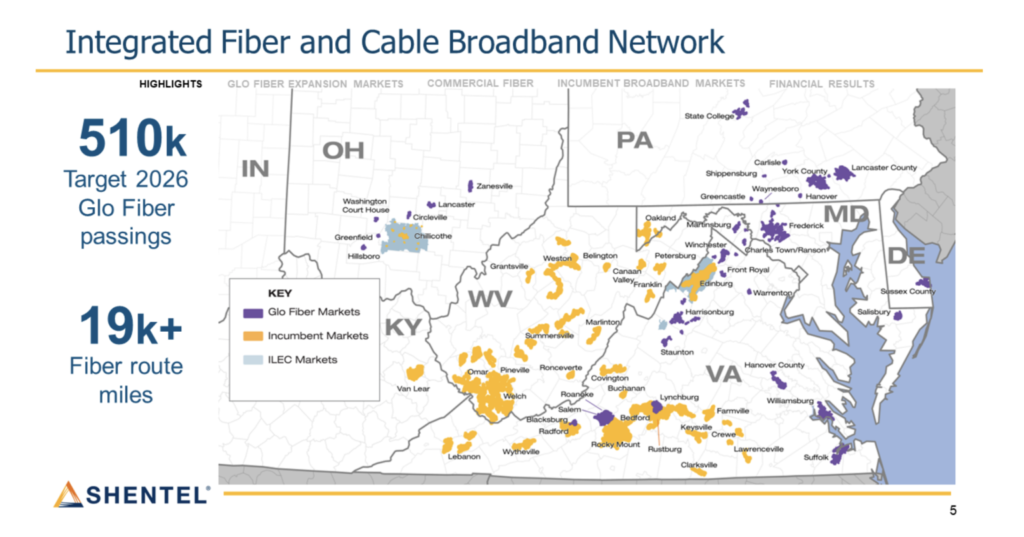
“In our incumbent markets, we did see a little bit of churn to Starlink with some of the promotional offers they launched in the first quarter,” Shentel CEO Edward McKay said in a Friday earnings call.
He pointed out that SpaceX last month reduced the price of its Residential Starlink plans by $15 per month for the first four months of a subscription. In March, it offered a similar promotion that shaved off $11, but for a six-month period.
“I think the biggest factor was [SpaceX] offered free equipment,” McKay added, referring to how the company began renting out Starlink dishes to new subscribers for free last year. A Starlink Residential subscription used to cost $120 per month, plus around $300 for the hardware. SpaceX has since reduced costs in the US, but only where Starlink has extra network capacity.
“We’ll see how long this lasts,” Shentel’s CEO said. “They could be offering these promotions in preparation for a potential IPO later this year.”
Following April’s promotion, Starlink.com isn’t showing a new discount for May, at least so far. Still, the aggressive promotions prompted Shentel to respond. “In these markets, we implemented a speed increase late in the first quarter, providing customers with higher speeds at the same price to better differentiate our service from satellite offerings,” McKay added.
The company has been offering a 200Mbps plan for $50 per month ($40 for new customers), which appears to be an increase from 100Mbps. In addition, Shentel offers a prepaid internet “Flex” service for $45 per month with 50Mbps.
But on Facebook, you can find some Shentel subscribers who switched to Starlink reporting faster internet speeds. SpaceX’s satellite internet can range from 100Mbps to as high as 400Mbps, depending on the Residential plan and capacity. “I never had many issues with Shentel, but the upload/download speeds are higher with Starlink,” wrote one user.
Last month’s discount also lowered the starting price for Starlink’s Residential 100Mbps plan to $35 per month, the Residential 200Mbps plan to $65 per month, and the Residential Max plan to $105 per month.
Starlink has already led to significant subscriber losses for rival satellite internet providers, Viasat and Hughesnet. But some analysts have pointed out that Starlink could also pose a competitive threat to traditional ISPs, even in urban areas, thanks to its discounts and potential user dissatisfaction with other broadband offerings.
On Thursday, Federal Communications Commission Chair Brendan Carr even noted that “satellite broadband is a real and growing competitor in the connectivity marketplace,” which could lower consumer costs. SpaceX is also preparing to upgrade Starlink with gigabit speeds and more capacity.
Credit: Michael Kan, PC Magazine


 Emeka OBINNWA(http://emex-systems.com)